Faith & Politics: Tracking Evangelical and Conservative Affiliation in the United States from 2014 to 2024
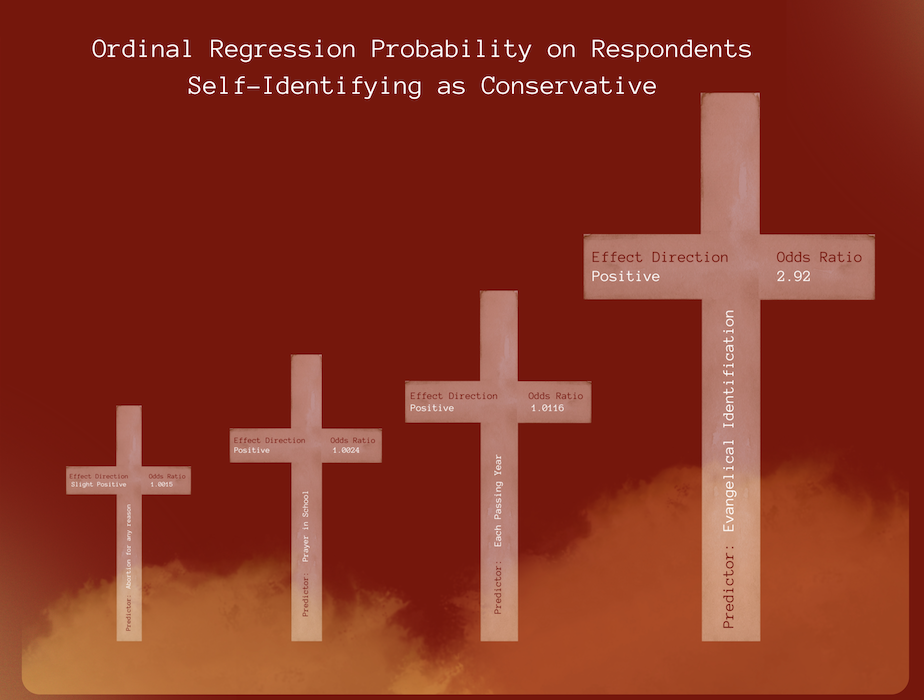
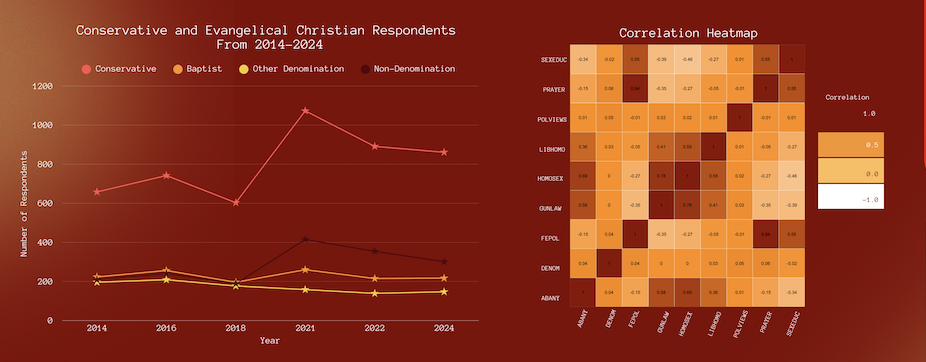
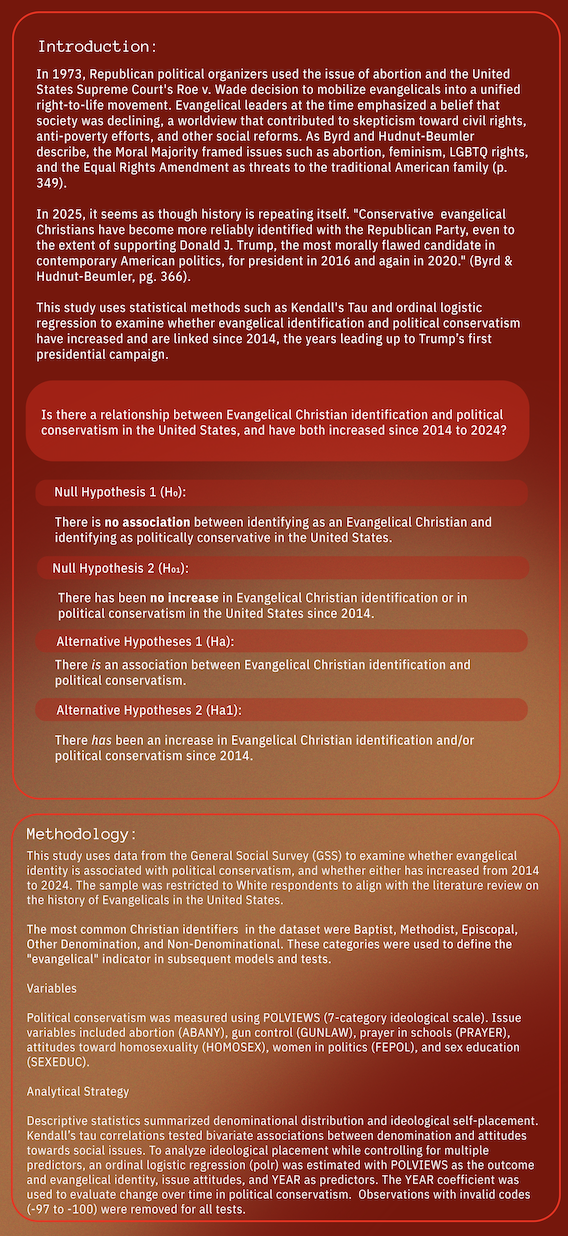
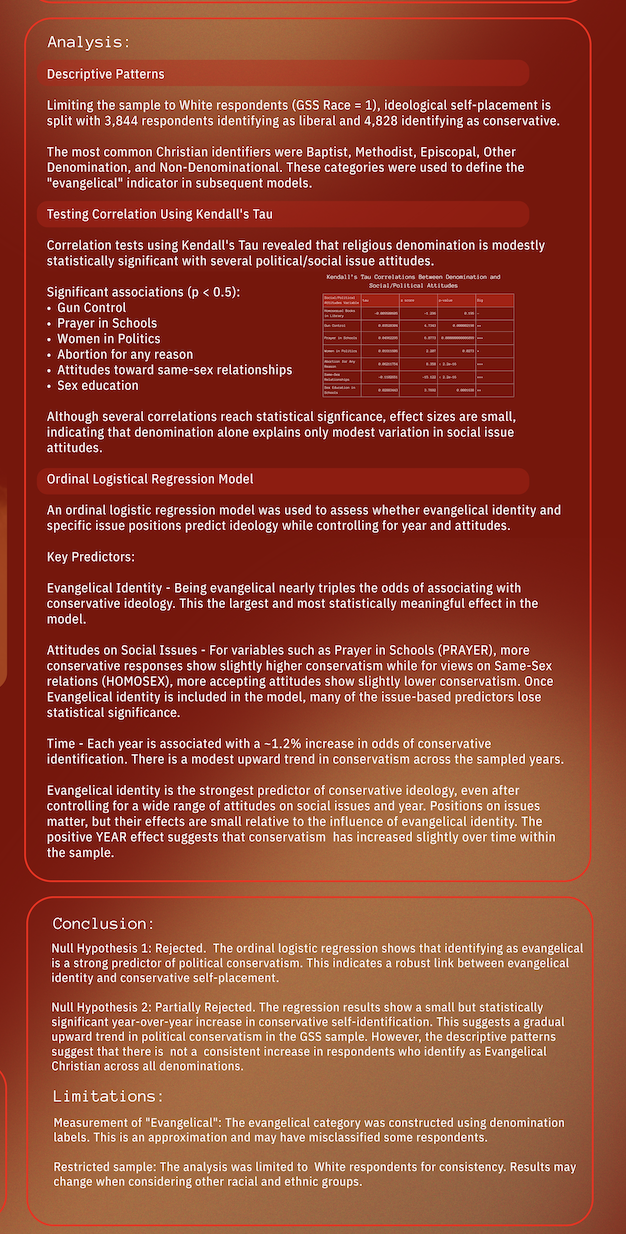
In 1973, Republican political organizers used the issue of abortion and the United States Supreme Court's Roe v. Wade decision to mobilize evangelicals into a unified right-to-life movement. Evangelical leaders at the time emphasized a belief that society was declining, a worldview that contributed to skepticism toward civil rights, anti-poverty efforts, and other social reforms. As Byrd and Hudnut-Beumler describe, the Moral Majority framed issues such as abortion, feminism, LGBTQ rights, and the Equal Rights Amendment as threats to the traditional American family (p. 349). In 2025, it seems as though history is repeating itself. "Conservative evangelical Christians have become more reliably identified with the Republican Party, even to the extent of supporting Donald J. Trump, the most morally flawed candidate in contemporary American politics, for president in 2016 and again in 2020." (Byrd & Hudnut-Beumler, pg. 366). This study uses statistical methods such as Kendall's Tau and ordinal logistic regression to examine whether evangelical identification and political conservatism have increased and are linked since 2014, the years leading up to Trump’s first presidential campaign.