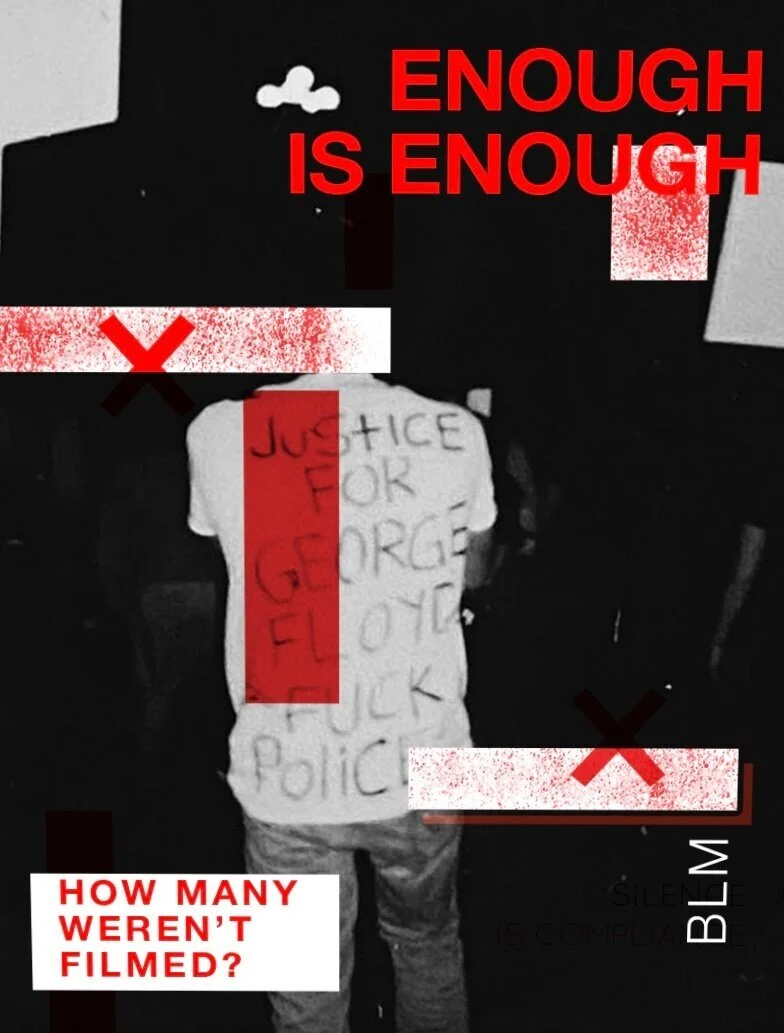
Black Creation Is A Revolutionary Act, One We Need Now More Than Ever
People are angry. Angry as cars burn on the streets of Los Angeles, as police knock an elderly protester into the hard concrete causing blood to leak from a newly formed wound in his head, as mainstream media diminishes demands for equality and justice to violent rioting and looting. All of this anger has several questions circling in my mind, like vultures circling a decimated husk of once was a living thing: For a nation founded on violence of magnificent magnitudes, by the same people and institutions that wish to continue oppressing and killing the black population, does no one else see the hypocrisy in such outcry against violence by mainstream media? Does no one remember the legacy of violence that has infiltrated our society and our communities that at a point in time mass shootings were as commonplace as a bird flitting from tree to tree? Has no one been listening and watching and absorbing the messages that Black artists and activists have been putting out for the world’s consumption for decades?
Black people have created a legacy of protesting the violent and abrupt beginnings and endings of our lives since this country’s inception. Yet, I ask for you reader, to reflect on the messages that artists have been painting, dancing and photographing for years. Pay attention to how the years have progressed but the theme of the work has stayed the same. Pay attention to how black art is discussed and how it's viewed. Pay attention. Pay attention. Pay attention.
Pay attention to how little these oppressive systems care for those who are still viewed as a separate group. When society concludes that we are not normal, abnormal things happen to us, and continue to happen to us over and over again. And out of all of this abnormality, Black artists still create powerful works that speak life to a volume of pain not experienced by others in this country in the same magnitude.
After our beloved Civil Rights leaders were murdered in state-sanctioned violence of the 60s and 70s, Black artists formed collectives to create art specifically for Black audiences that asserted Black identity and racial justice. The politicization of black students with the Watts Uprising in 1965, created so many opportunities for black art and politics that work was abundant and clear in its messaging -- asserting Black humanity even though it is often denied of us.
This anger many of us feel now is nothing new. Despite the “victories” of the Civil Rights era, there were frequent uprisings brought on by the continuous oppression of Black peoples. These ever-present protests we’re experiencing now are the product of a legacy of anger and demands for change. People would have you believe that the nonviolent protests of the 50s and 60s brought upon change because they were “nonviolent”. In reality, those protests weren’t viewed as nonviolent at the time. The art that was birthed during this time by photographers like Gordon Parks showed a nation still divided and a subclass ever present even in today’s time.
Artists of the 80s, 90s, and early 2000s struggled to assert their identity as well. Some of Jean Michel-Basquiat’s most poignant work was about the death of his friend and fellow artist, Michael Stewart, at the hands of the New York Police Department. Kara Walker’s work examines what it means to be a Black woman in the legacy of rape and violence against Black women at the hands of the White slave master-- a figure that still exists to this day in the form of police (slave catchers) and slave auctioneers (President Trump) that devalue the cost of Black life.
Black art is about creation and freedom from an oppressive regime determined to smother the flames of passion, protest, and demands for the recognition of lives lost. As we enter a time period of civil unrest, after the countless deaths of black people - men, women and children; all of them cisgender heterosexual, transgender, and queer. I ask you to examine your relationship with Black art now. If you are an artist keep creating. If you are a viewer keep uplifting. Because not only is Black life, Black protest, Black joy and Black pain revolutionary-- Black art and creation is a revolutionary act. Black art can not be tamped out nor ignored and neither will the cries for change echoing throughout this country, throughout this world.
Ralph Ellison, the author of Invisible Man, said in a 1995 interview, “I recognize no dichotomy between art and protest.” To create is to protest. To be happy, angry or in despair is protest. To exist is to protest.
Rest In Power to the countless lives lost to police brutality and systemic oppression. I exist for you.
By Mikala Everett