Emotional Claims and Erased Context: A Critical Analysis of the TikTok Response to Beyoncé’s 2024 Christmas Day Performance
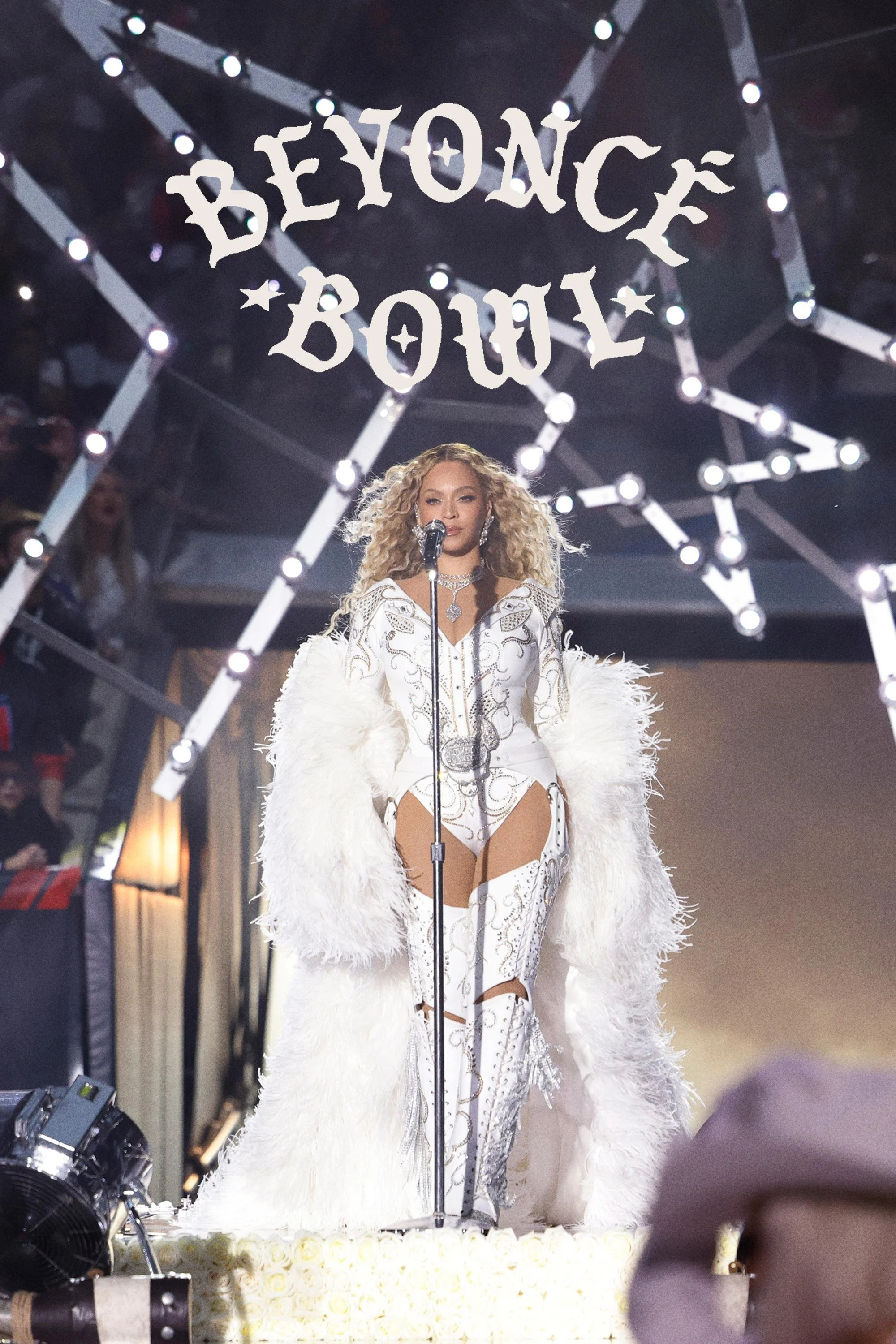
Beyoncé is no stranger to sparking critical conversations about identity, politics, and race in America. True to form, much of the conversation launched after Beyoncé’s 2024 Christmas Day performance aired live on Netflix, was fueled by one TikTok creator, Hannah Han, after she claimed Beyoncé’s ode to Black southern culture was “Americana propaganda” (Han, 2024, TikTok). Over the next two months, this one viral TikTok video incorrectly sparked widespread discussion and misunderstandings about propaganda, what it means to be Southern, Black and American, and “suckling on the teat of your oppressor”(Daven, 2025, TikTok). Han’s misreading of Beyoncé’s 2024 Christmas Day performance as American propaganda reflects a failure to critically engage with the cultural and political significance of Black Southern identity in American life, ultimately derailing meaningful conversation about race, region, and representation.
TikTok creator Hannah Han opened up Netflix to watch Beyoncé’s first performance of her album Cowboy Carter, on December 25, 2024 alongside millions of other Beyhive fans and family members roped into watching with them. In total, 27 million viewers tuned in to watch the half-time performance that was riddled with black cowboys, homecoming queens, and line dancing, all staples to black southern culture. An even greater ode was made to football, the backbone for many black southern gatherings and social events since the performance was featured during a football game that many viewers would not have cared about or planned to watch. Han, after watching the performance, proceeded to open up TikTok and proclaim breathlessly, almost excitedly, that “Beyoncé is this country’s (The United States of America) best propagandist right now” (Han, 2024, TikTok). Han went on to continue this line of thought, jumping from claim to claim in an animated way, giving the impression of a preteen girl telling a scandalous secret about another girl in class. Perhaps this is what sparked the out-pour of responses that ranged from attacks on Han’s biracial, midwest identity, to her associating displays of Black southern culture with Americana, when historically people who have identified with any extreme American pride have been extremely violent towards Black people.
Han’s claims were not backed by any authoritative or logical backing, but based purely on her initial interpretation of the performance. According to Han, there was “so much black culture infused with that America culture” (Han, 2024, TikTok), as if Black Americans have not largely contributed to American culture as we know and understand it today. This is the crux of Han’s argument, the separation of what it is to be Black American and just American, as if these cultures are not inextricably linked as long as The United States of America exists.
I am not the only spectator of the TikTok outrage who left with this takeaway. Brittany Luse, host of NPR’s It’s Been A Minute, invited two scholars: Nicholas Cull, Mass Communication Historian, and Dr. Daphne A. Brooks, scholar of Music and Black Feminism, to discuss Han’s video and whether or not Beyoncé’s performance would be considered propaganda from an academic lens. Both Brooks and Cull immediately shot down labeling the performance as propaganda. Brooks claimed that all art is political, and then references another preeminent scholar in Black Studies, Stuart Hall, when she states that culture is not a zero-sum game. This means that culture, specifically Black American culture, does not exist in separation from American culture and has a relationship with the politics of race and racism by nature of Black American culture's existence. “Propaganda is a flattening out of the ways in which we think about art and cultural performance in this day and age” (Brooks, It’s Been A Minute).
Brooks goes on to further explain that perhaps viewers like Han were struggling with the patriotism that was bound up in the performance while not noting the nuances of social critique that are prevalent in the Cowboy Carter project and the performance itself (Brooks, It’s Been A Minute). Brooks uses her knowledge of Black studies and music to not only critique Han’s points but to shed light on an alternative viewpoint that could have been considered when engaging with Beyoncé’s performance: viewers should be engaging with this performance, and really any art through a critical lens. Cull pushes this point further by noting that the hysteria around Beyoncé’s performance suggests that “we are living in a ‘regular’ panic in American life over propaganda,” (Cull, It’s Been A Minute) and that all of the fear surrounding being fed “propaganda” is as natural to America as apple pie. Americans are a suspicious bunch, ever concerned and convinced that they are being manipulated.This national anxiety around propaganda is nothing new; similar panics surfaced after the American Revolution and again during the Red Scare following World War II (Cull, It’s Been A Minute).
“Beyoncé isn’t exactly making propaganda but what she’s presenting and how she’s presenting it isn’t coming out of or into a vacuum” (Luse, It’s Been A Minute). This kind of scholarly, well-supported argument directly discredited Han’s more emotionally driven critique by grounding the conversation in historical context, academic theory, and expert insight. Han relies on personal reaction and speculative language, It’s Been A Minute uses established frameworks from Black studies and media theory to situate Beyoncé’s performance in a long tradition of politically engaged art. This both challenges Han’s interpretation and validates Beyonce’s history of political performance in her life and her music.
Stuart Hall in his notorious article, “What is This ‘Black’ in Black Popular Culture?” asserts that “popular culture always had its base in the experiences, the pleasures, the memories, the traditions of the people. It has connections with local hopes and aspirations, local tragedies, and local scenarios that are the everyday practices and the everyday experiences of ordinary folks” (Hall, 107-108). Beyoncé has been a pop artist for a very long time and as she’s grown more seasoned in her career she has grown more interested in communicating stories and creating projects that connect to the experiences, the pleasures, the traditions, and the memories of Black women and people. Her recent work, Cowboy Carter, is another delve into Black Southern tradition, that sequentially follows her work on Beychella and Lemonade. “Themes related to Beyoncé’s intersectional identity as a model of black and southern womanhood have recurred in her song lyrics, performances, and visual representations” (Richardson, 1). Beyoncé is no stranger to communicating nuanced political messages in her music.
The artist herself has mentioned that inspiration from this project was born from the rejection and racism she faced after performing “Daddy Lessons” at the Country Music Awards in 2016. Once proclaimed too black and too country earlier in her career, she was later shunned in the latter half of her career because she was too “pop.” On one hand, she was too country and the other too pop, but the quiet part is, that she is too Black for both spaces despite the successes she has had in her career. “Black popular culture is a contradictory space. It is a site of strategic contestation” (Hall, 108). If Black artists do not get to perform stories and music that was vital to their upbringing and their local hopes and tragedies, what kind of stories can they tell?
Even Beyoncé’s performances are an exploration of “her encounter with power” (Hartman, 2) in relation to white America. If Beyoncé is labeled a propagandist for the very powers that have historically blotted out, erased, ignored, and disregarded the stories of Black women, it flattens the very critiques she attempts to make in her artistry. The Beyoncé Bowl performance, like many of her recent performances, exist within the context that “Black cultural spaces and creations are tangible content or artifacts situated within the ‘patriarchal white supremacist society’” (Drayton, 10). We now have the opportunity to capture the biography of the free Black and the “successful” Black person through explorations of Black identity and culture– an opportunity that is blemished when surface-level critiques like Han’s flatten such work as propaganda. It’s Been A Minute acknowledges what these contributions lend to our political and cultural landscape through thoughtful, critical analysis instead of erasing the significance of Black American artistry.
Han alluded through her critique that Black culture is separate from American culture or “Americana” as if people cannot be both “Black” and “American”. There have been many movements in America’s history that have worked to not only uplift this group of people routinely and summarily disenfranchised in the United States, but to also assert and celebrate the contributions Black people have made to this country despite its violence to Black citizens. “And, of course, silenced and unacknowledged, the fact of American popular culture itself, which has always contained within it, whether silenced or not, black American popular vernacular traditions” (Hall, 6). Whether Han acknowledges or is even aware of the legacy and traditions wrapped up in Beyoncé’s Christmas Day performance, Black Americans have been striving to let their voices be known, and their traditions be honored despite all that has been taken. “The irreparable violence of the Atlantic slave trade resides precisley in all the stories that we cannot know and that will never be recovered” (Hartman, 12).These performances are a balm to the loss of cultural heritage ripped away from Black Americans during chattel slavery.
Beyoncé, following in the legacy of Black American artists before her and paving the way for those to come, continues to challenge and redefine narrow conceptions of American selfhood from which Black people have been excluded from historically (Richardson, 6). Beyoncé and other Black artists have the opportunity to “tell [our] stories as a form of compensation or even as reparations” (Hartman, 12). I hope, in agreement with the scholars on It’s Been A Minute that people will engage critically and thoughtfully with any work put before them, and especially those of Black Americans, before quickly and incorrectly labeling them. Then we can have critical conversations about how Black artists reckon with their American identity after centuries of erasure and disenfranchisement instead of who is suckling on whom’s teat.
Works Cited
Daven. Suckling On The Teat Of Your Oppressor. January 2025. Deleted from platform.
Drayton, N’Dea. For the Culture: A Textual Analysis of Black Placemaking of Black Culture in “BeyChella.” 2019. Syracuse University, https://www.proquest.com/dissertations-theses/culture-textual-analysis-black-placemaking/docview/2299173408/se-2?accountid=27668.
Hall, Stuart. “What Is This ‘Black’ in Black Popular Culture?” Social Justice, Apr. 1993, pp. 104–14, https://www.jstor.org/stable/29766735?seq=1.
Han, Hannah. No One Is Doing It like Her That’s for Sure. 26 Dec. 2024, https://www.tiktok.com/@hannah.is.over.this/video/7452582618861735198?_r=1&_t=ZP-8vky5JJM0qc.
Hartman, Saidiya. “Venus In Two Acts.” Duke University Press, vol. Volume 12, no. 2, June 2008, pp. 1–14, https://warwick.ac.uk/fac/arts/history/research/centres/blackstudies/venus_in_two_acts.pdf.
Luse, Brittany, et al. Is Your Favorite Pop Star Spreading Propaganda?https://www.npr.org/transcripts/1263526159.
Richardson, Riché. “Beyoncé’s South and the Birth of a ‘Formation’ Nation.” Emancipation’s Daughters Reimagining Black Femininity and the National Body, 2021, pp. 221–34