Curating Visibility: Race and Representation in the Met’s Featured Exhibits Digital Content
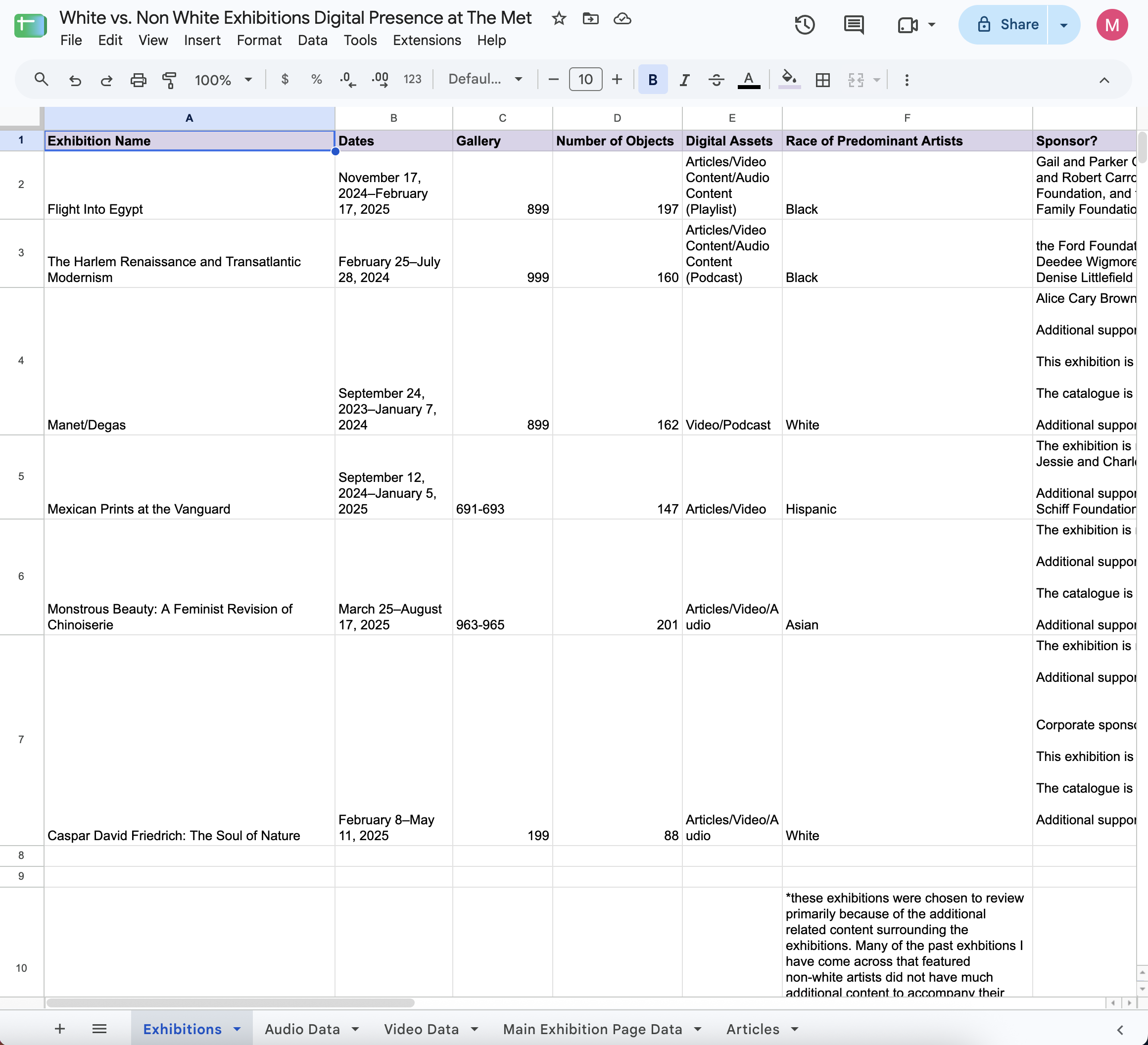
This project/presentation asked if digital content creation can guide curatorial selections of “Featured Exhibits” to feature more artists of diverse backgrounds.
At the time of this presentation, featured exhibits, highlighted exhibits that typically feature a lot of digital content, events, and social media push, mainly featured White American or European artists. This skew made me question if there can be more value found in diversifying featured exhibits.
Tools used:
BigQuery and SQL → audio and web data validation
Google Data Studio → web data validation
Quantam Metrics → web data validation
YouTube Analytics → video data validation
Google Sheets → data organization
Adobe Express and Flourish → visualization design and narrative layout
Data Processing Workflow
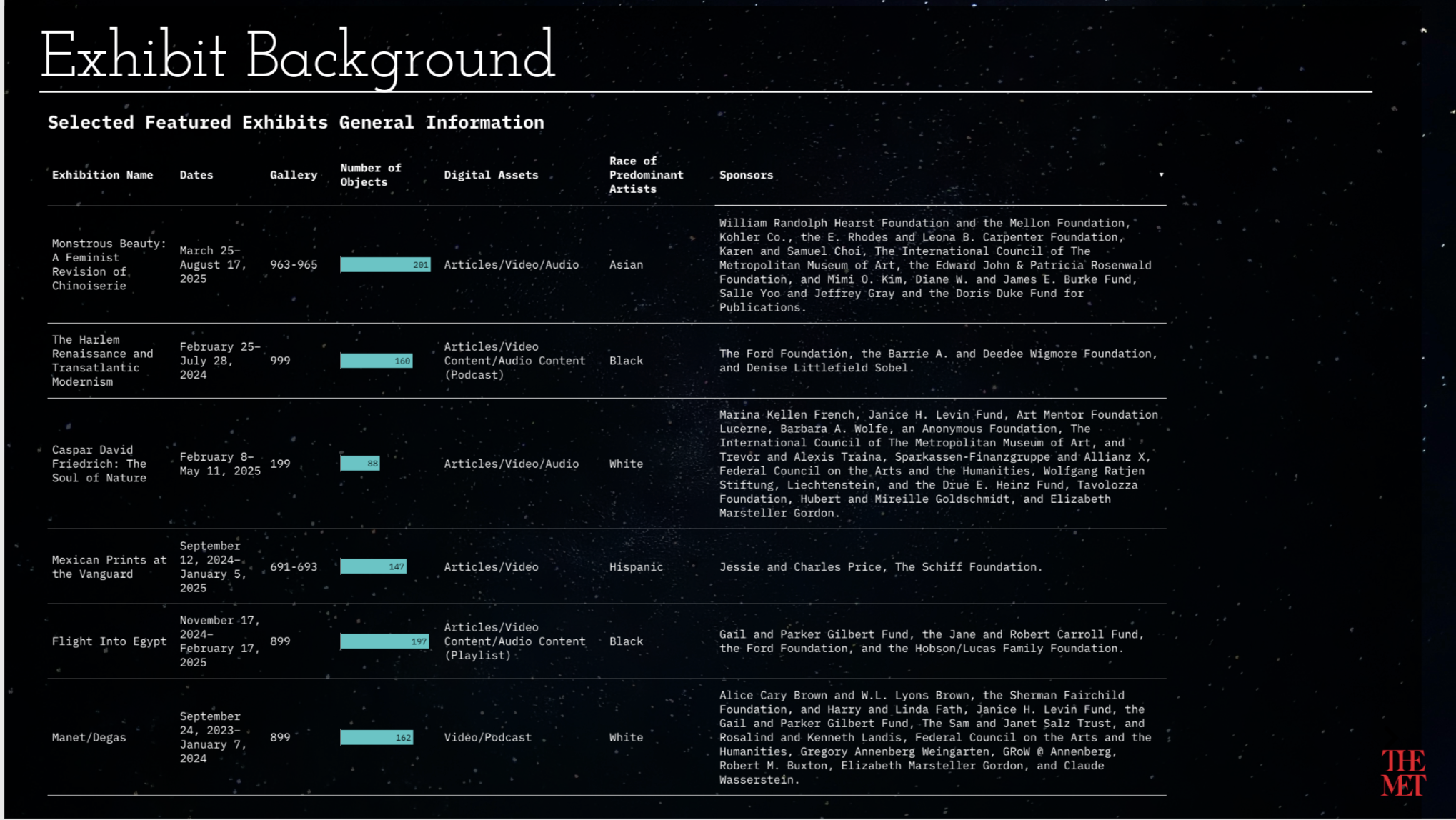
Identified which exhibits I need to compare based on amount of content present for comparison. Four exhbits that featured non-white artists were compared to two popular white artist featured exhibits across all time.
Pulled data from Google Data Studio, Quantum Metrics, The Social Media Team, snd YouTube Analytics
Validated all metrics using BigQuery
Number of Sponsers
Data showed a heavy funding bias for Western Euro-centric Art.
Audio Content
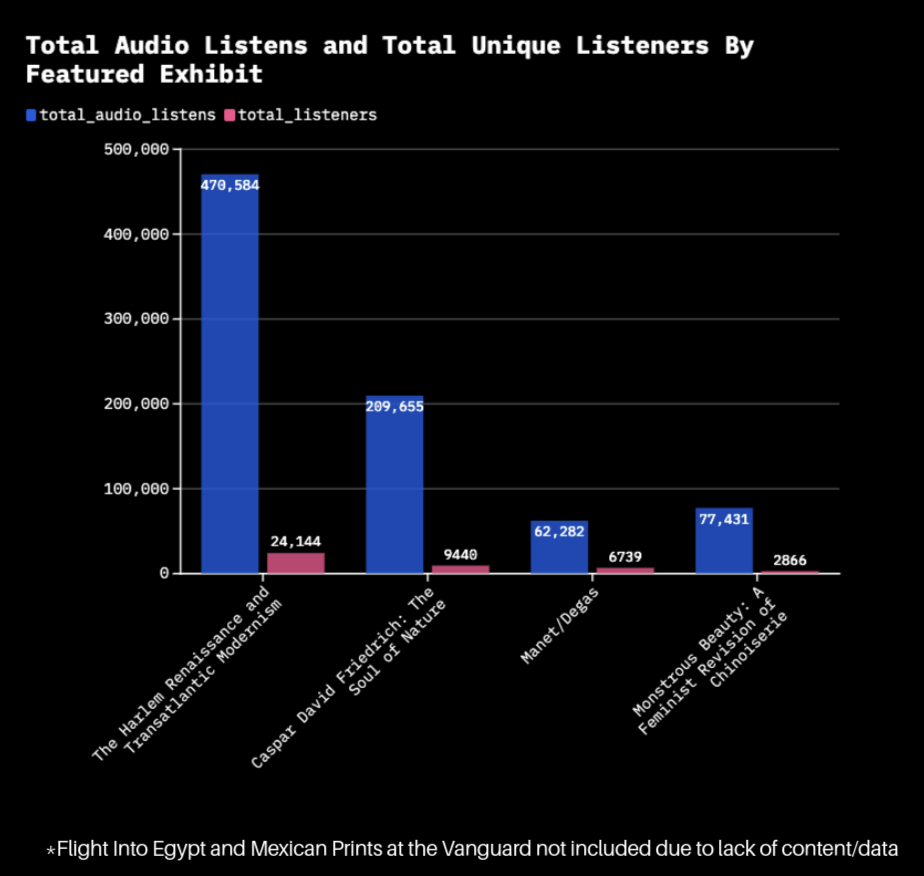
Harlem Renaissance brings in 470,584 listens; more than all other exhibitions combined. However, average session duration is very low and suggests that Harlem Renaissance audio content is highly discoverable but only consumed in short snippets.
Featured Exhibit Overview Page
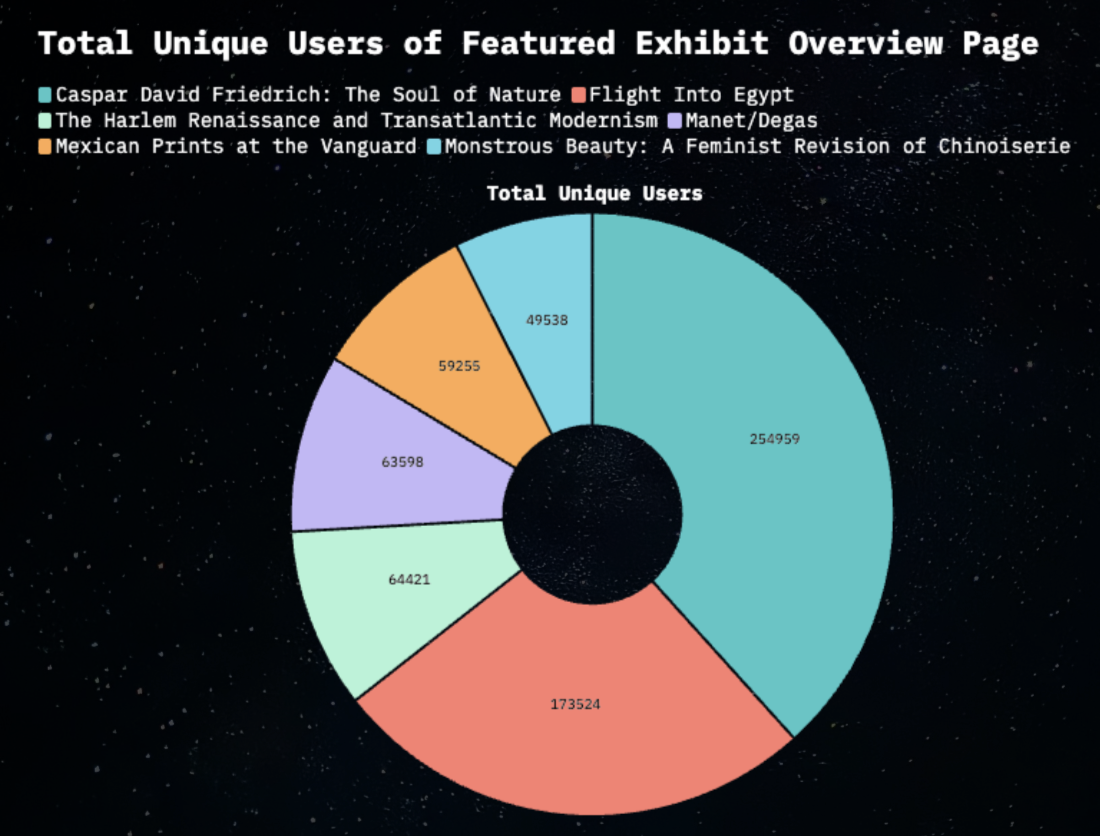
Caspar David Friedrich dominates web traffic with 254,959 unique users, but has a low average session duration.
Monstrous Beauty: Glamour as Resistance pulls 10,933 unique readers with a strong read time of 6 minutes and 10 seconds.
The highest performing article for depth of engagement is Flight Into Egypt: Reclaiming Ancient Egypt in Harlem keeping users reading for 19 minutes and 23 seconds.
Video Content
Viewers prefer short-form content: Mexican Prints only averages 4 minutes of watch time for a video that is almost an hour long. The Harlem Renaissance videos perform the best out of the group with one video achieving a longer view duration than the video which indicates re-watches.
The Manet/Degas Exhibition Tour video generated the highest total views at 216,800 closely followed by The Harlem Renaissance Exhibition Tour. Subscriber turnover is low across all videos.
Translating Engagement Insights into Immersive Digital Experiences
The Met audience has many avenues to engage with The Met's digital content, but there are many possibilities for expanding future engagement. The presentation has illuminated that a large budget and institutional backing isn't all that is necessary for audiences to deeply engage with The Met's digital content. Future concepts can bridge many topics and a wide array of content areas for engagement.
Key Findings
Diverse Content Drives Impressive Reach
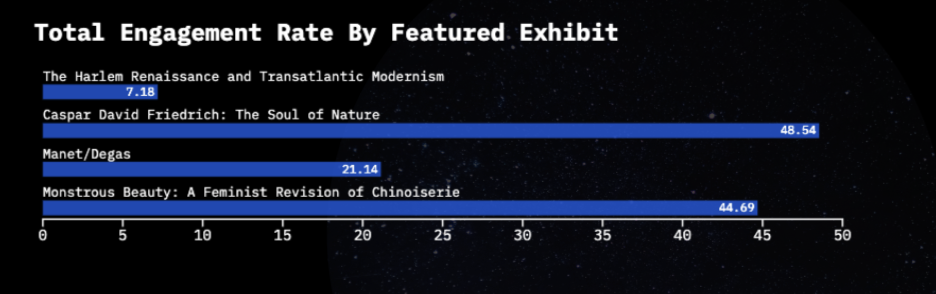
Exhibitions highlighting diverse artists (Harlem Renaissance, Flight Into Egypt, Monstrous Beauty) consistently drive the highest unique user spikes, deeper reading times and deeper audio engagement.
Funding vs. Engagement
Euro-centric exhibitions secure the majority of financial sponsorship, yet diverse contemporary narratives outperform them in digital reach across all exhibition sizes and budget levels.
Content Optimization
Audiences do not seem to be fond of long-form video formats such as 50+ minute lectures. Future digital choices could prioritize mid-length virtual tours and highly interactive articles.
Limitations
Lack of consistent content creation across all featured exhibits